




Dashboards: Driving Better Insights with Your Data
February 26, 2026
Key Takeaways
• Business dashboards turn complex financial and operational data into clear visual insights, helping leadership quickly understand performance and trends.
• Real time dashboards support faster decision making by centralizing key metrics such as revenue, expenses, cash flow, and performance indicators.
• Customized dashboards allow organizations to track the metrics that matter most, improving visibility into financial health, operational efficiency, and strategic goals.
• Dashboards help identify trends, risks, and opportunities earlier, enabling leadership teams to take proactive action and improve planning.
• By transforming raw data into actionable insights, dashboards empower organizations to make smarter, data-driven decisions.
Being up to date on your company’s financial health is critical. It allows you to make informed decisions, spot financial red flags early, keep an eye on the cash flow, and increase transparency. However, to do so, one has to wade through a sea of data and turn it into actionable insights.
This is where dashboards come into the picture. Dashboards provide real-time financial insights, offering clarity, control, and confidence to your organization.
What is a Dashboard?
Imagine having a bird’s-eye view of your company’s financial health, presented clearly on a single screen. That’s exactly what a dashboard does. A dashboard is a centralized platform that transforms complex data into intuitive, visual insights, allowing you to view your organization’s performance immediately, rather than waiting for updates.
Dashboards offer a big-picture view and the ability to drill down into details when needed. They can be tailored to highlight:
- Financial health: Cash flow, profit and loss, and balance sheet trends.
- Regulatory compliance: Tax deadlines, filings, and audit readiness.
- Operations: Accounts payable/receivable, payroll, and expense tracking.
Why Dashboards Matter for Your Business
A well-designed dashboard does more than simply display numbers. It helps you:
- Gain real-time visibility: No more waiting for month-end reports.
- Make informed decisions: Plan, budget, and allocate with confidence.
- Enhance transparency: Build trust by sharing and making financial data accessible.
- Proactively manage risks: Identify anomalies, delays, or compliance issues promptly.
Simply put, this can help you transform raw financial data into actionable insights for smarter business decisions.
Core Features of an Effective Dashboard
Not all dashboards are created equal. The most effective ones are:
- Customized: They are built around your industry needs and organizational goals.
- Interactive: They allow you to move from high-level summaries to detailed, transaction-level data.
- Integrated: They offer seamless connectivity with accounting platforms such as QuickBooks, Xero, Intacct, and more.
- Proactive: They provide timely alerts and notifications for key deadlines or any unusual activity.
Key Benefits of Dashboards
Some of the most significant benefits of having effective dashboards:
Access to real-time financial data
Since dashboards provide immediate insights into your company’s financial health by leveraging real-time data, you no longer have to wait for monthly or quarterly reports to make informed decisions. For example, if you’re in the middle of a meeting and someone enquires about the company’s current cash flow, you can easily pull up your dashboard and have the answer in seconds. This real-time access to data can empower you to make swift, informed decisions that can significantly benefit your business.
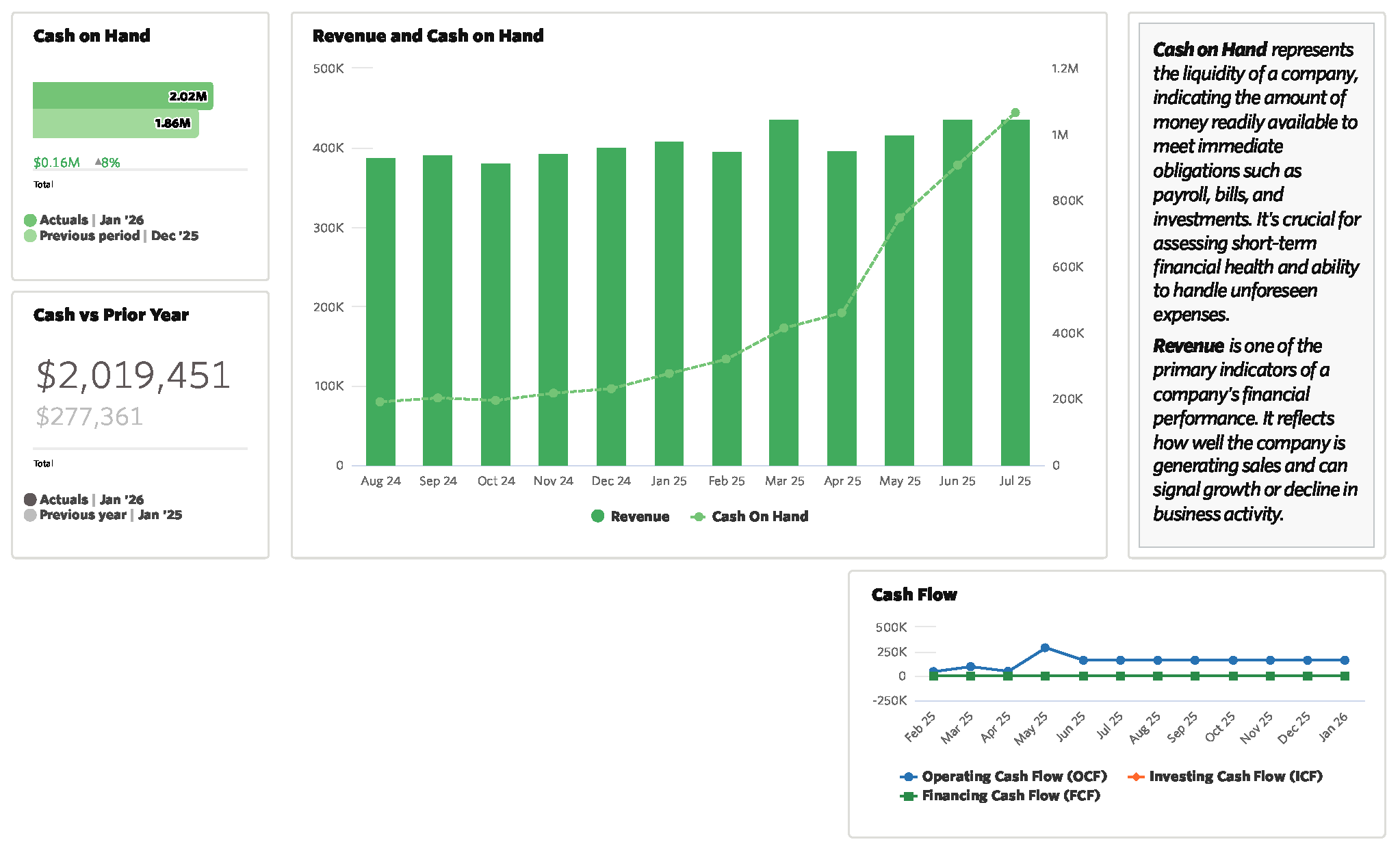
Enhanced decision-making and financial oversight
Dashboards put critical information at your fingertips, facilitating faster and more informed decision-making. By monitoring key performance indicators in real time, you can identify trends and patterns as they emerge, rather than after the fact. This proactive approach enables you to capitalize on opportunities and address issues before they escalate.
For example, if your dashboard shows a sudden dip in gross margins, you can investigate and address it immediately. This level of financial oversight can determine whether an issue remains a minor setback or turns into a significant financial nightmare.
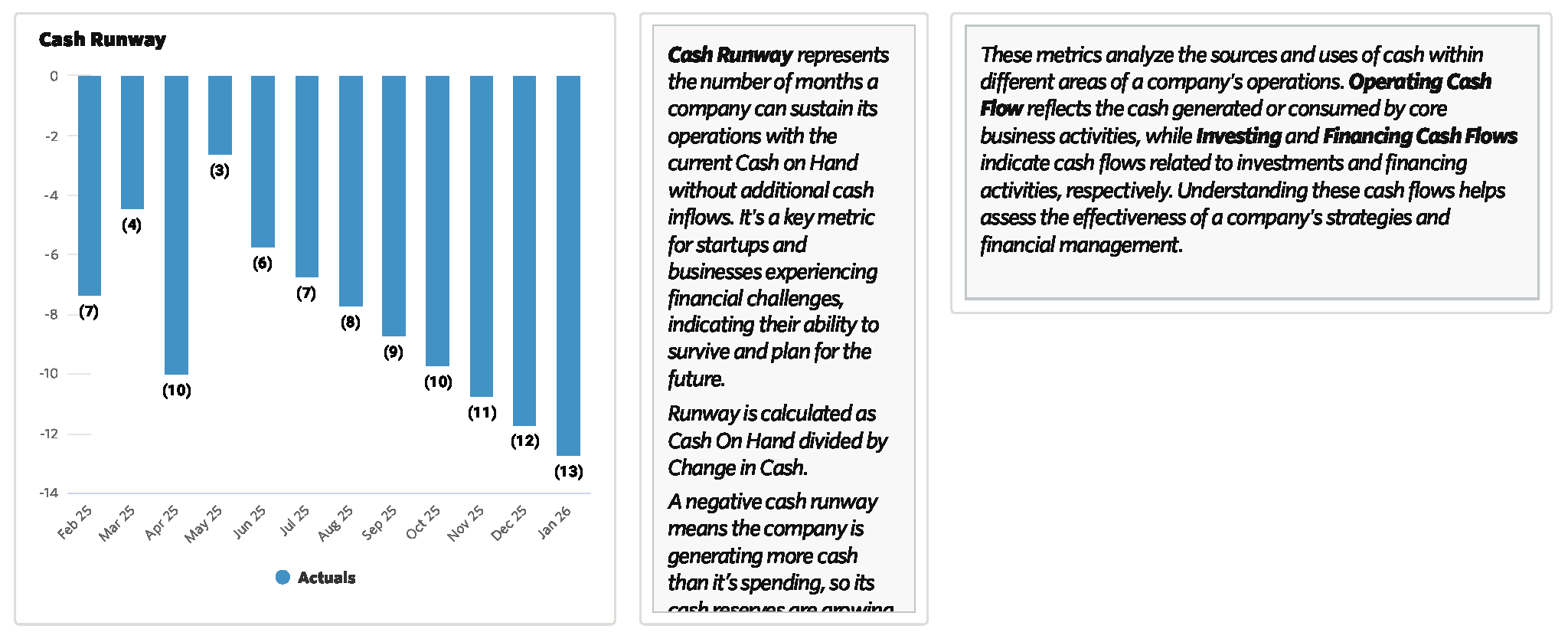
Improved efficiency and transparency
Creating and distributing financial reports is a significant time sink in several businesses. With dashboards, you can automate this process. Doing so minimizes the risk of human error in data entry and calculation. Additionally, dashboards make financial data easier to grasp for non-finance professionals. By presenting data visually, they make complex information accessible and understandable to those who may not have a background in finance.
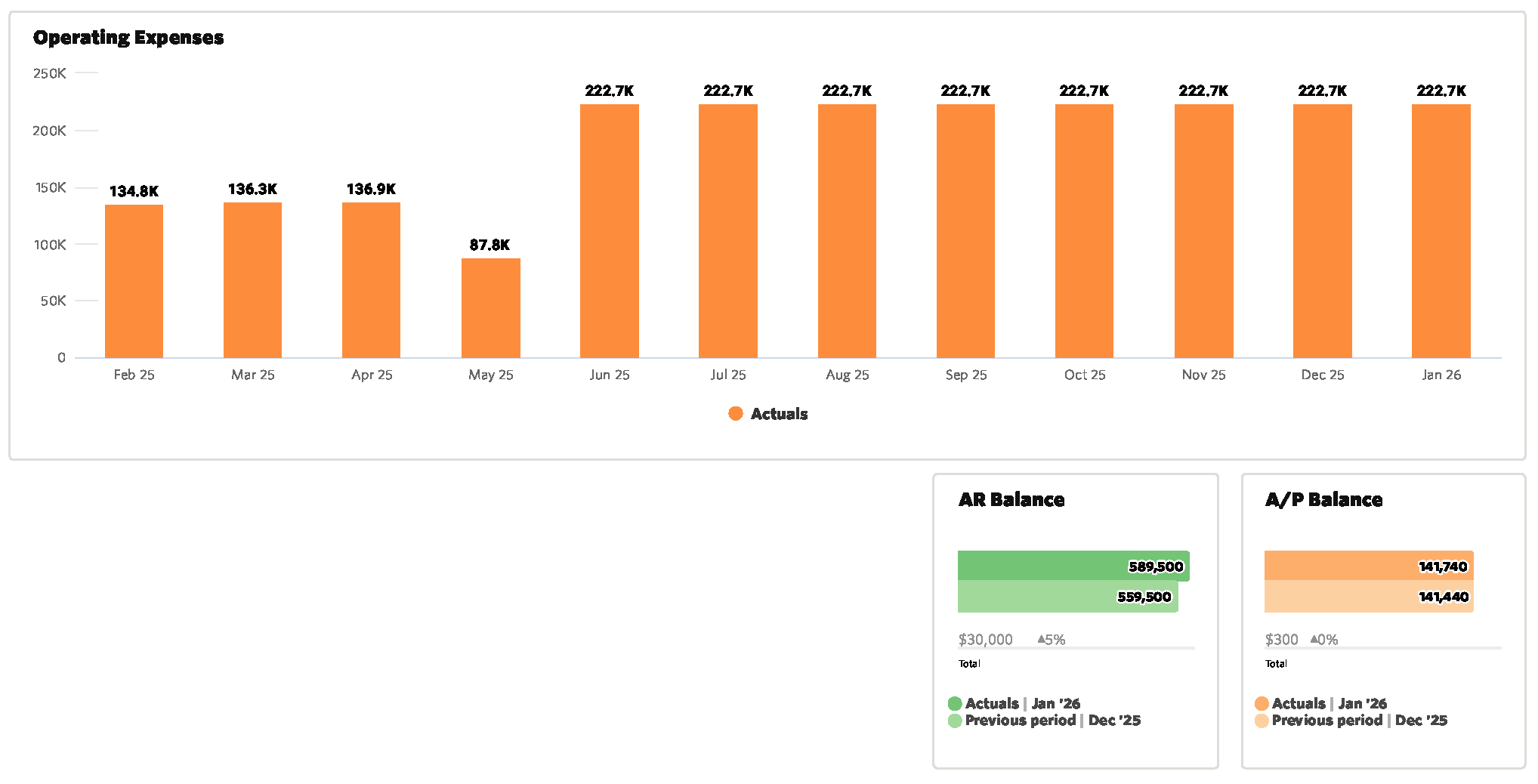
Boosted flexibility and adaptability
Dashboards are highly adaptable and can be tailored to your specific requirements. They can be customized for a startup to track burn rate and runway or for an established business to monitor complex financial ratios, highlighting the metrics that matter most to you.
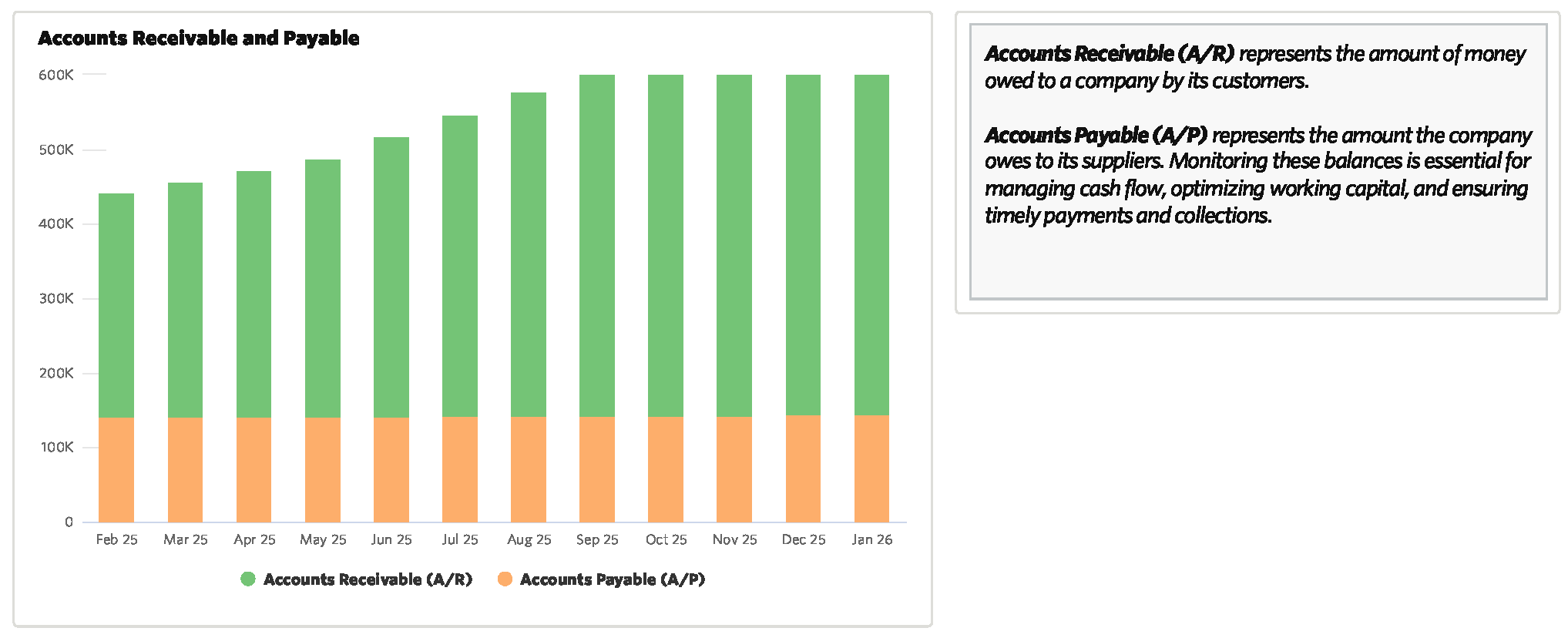

Why Customization is Important
Generic dashboards rarely provide the insights you need, which is why customization is crucial.
- For nonprofits, a customized perspective can help track restricted funds and grant compliance.

- For small businesses, a personalized view can help focus on receivables and expense categories.
- For enterprises, dashboards are often customized to prioritize cash flow forecasting and multi-entity management.
When customization is built to align with your unique priorities, your organization gains a powerful tool for strategic growth.

How to Adopt Dashboards in Your Business
Transitioning to dashboards doesn’t require a complete overhaul of your current processes, although implementing them effectively requires careful planning and execution. Many platforms offer seamless integration with existing accounting software, enabling a straightforward and efficient setup. Doing so allows you to tailor dashboards to your unique goals and transform raw numbers into actionable insights.
You’re able to make informed decisions, achieve greater transparency, and have a forward-looking view of your company’s financial health.
Dashboards as a Strategic Advantage
Dashboards are more than just reporting tools. They give you actionable insights, enabling you to make decisions in real-time. By centralizing financial data into a clear, accessible format, they provide the clarity leaders need to act with confidence, turning it into a strategic advantage for your organization.
Conclusion
Dashboards are most powerful when they are built around your mission, operations, and decision-making needs, not just your data. The right dashboard does more than display numbers. It translates financial and operational information into meaningful insights that help leaders act quickly, improve transparency, and strengthen long-term performance.
Rubino brings deep experience designing and implementing personalized dashboards for nonprofits, associations, and growing organizations. We understand the unique reporting needs of mission-driven entities, from tracking restricted funds and grant compliance to monitoring program efficiency, cash flow, and long-term sustainability. Our team works closely with leadership to identify the metrics that matter most, integrate data across platforms, and build intuitive dashboards that deliver clarity in real time.
Whether your organization is seeking better visibility, stronger financial oversight, or a more strategic way to communicate performance to stakeholders and boards, Rubino can help turn your data into a powerful decision-making tool. With tailored dashboards and ongoing advisory support, we help organizations move beyond reporting and toward insight, confidence, and smarter growth. Contact us today to get started.
Related Postings
-
Fixed Price vs Cost Plus Contracts: Accounting, Revenue Recognition, and Risk Explained
Mar 6, 2026No Comments